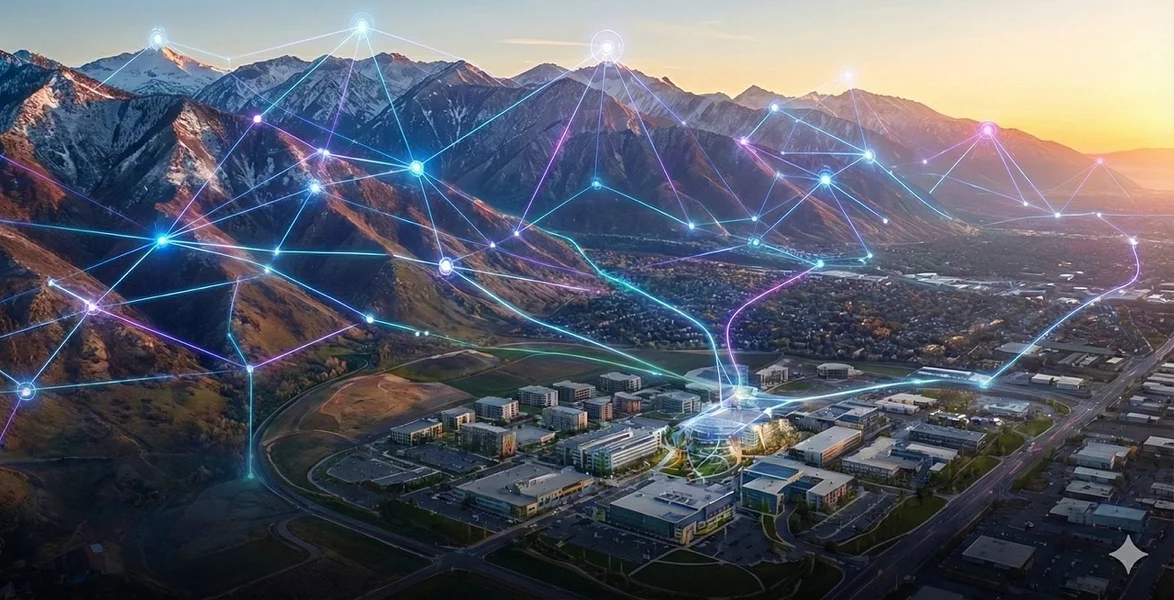
Data-Driven Marketing Strategies for Utah's Technology Sector in 2026
By Carl Tanner | Technology Marketing Consultant
May 9, 2026 • 9 min read
Introduction
By 2026, Silicon Slopes has transcended its status as a "promising hub"—it is now a global powerhouse rivaling the coasts. But maturity brings saturation. For Utah's tech leaders, relying on product superiority alone is no longer a viable growth strategy. The market is too loud, and the competition is too fierce.
To dominate this evolving ecosystem, companies must pivot from intuition to precision. This requires a ruthless application of advanced analytics and AI-powered personalization tailored specifically to our unique business landscape. Whether scaling a startup in Lehi or expanding a legacy firm in Salt Lake, the path to sustainable revenue lies in data. Here is how to turn those insights into a competitive moat.
Understanding Utah's Technology Landscape
The "Post-Unicorn" Reality: From Hype to Hybrid Maturity
In 2026, the Silicon Slopes narrative has shifted. We have graduated from the "scrappy startup hub" phase into a mature, multi-layered ecosystem. The "growth at all costs" mantra of the early 2020s has been replaced by a mandate for efficient durability. With venture capital deal flow in 2025-2026 bifurcating into early-stage bets or late-stage certainties, mid-market companies are squeezed. For marketers, this means the era of "spray and pray" ad spend is over; every campaign must demonstrate immediate contribution to unit economics.
The Three-Pillar Diversification
While B2B SaaS remains our bedrock (anchored by Adobe, Domo, and Qualtrics), the 2026 landscape is defined by diversification. We are seeing a surge in Life Sciences and Deep Tech/AI sectors that require fundamentally different marketing cadences than traditional software.
- SaaS: Highly saturated; requires account-based marketing (ABM) to displace incumbents.
- Life Sciences: Regulated and trust-heavy; requires thought leadership and long-tail content strategies.
- Deep Tech/AI: Complex value propositions; requires translating technical specs into business outcomes.
The "High-Trust" Network Effect
Utah's market is uniquely "porous"—information travels faster here than in arguably any other tech hub due to our tight-knit, values-driven community. High social connectivity means that reputation is your primary marketing channel. Data shows that Utah-based decision-makers rely heavily on peer validation before engaging with sales teams. Your data strategy must therefore measure "dark social" intent—tracking the offline and community-led conversations that precede a form fill.
The 2026 Economic Filter
With the "Agentic AI" shift and mixed economic signals in 2026, local buyers are skeptical of "AI-washing" (slapping an AI label on legacy tools). They demand proof of efficiency. Marketing messaging in this region must pivot from "What we do" to "How we de-risk your operations."
The Dark Social Data Strategy: Illuminating the Invisible Funnel
In the tight-knit Silicon Slopes ecosystem, the most valuable attribution data does not come from a Google ad click. It comes from a private Slack DM between CTOs, a recommendation at a post-conference dinner in Park City, or a link shared in a closed Discord group.
Standard analytics (GA4/5) misclassify this traffic as "Direct" or "Organic," creating a blind spot we call Dark Social. In 2026, relying solely on cookie-based tracking is negligent. Here is the three-part framework to capture the signals your competitors are missing.
1. The "HDYHAU" Renaissance (Self-Reported Attribution)
Automated attribution software overvalues the last click (usually a branded search) and undervalues the demand creation source (e.g., a podcast or peer referral).
- The Fix: Implement a mandatory "How Did You Hear About Us?" (HDYHAU) open-text field on all high-intent demo forms.
- The Utah Angle: You will find that "My friend at [Local Unicorn Company]" or "The Silicon Slopes breakfast" appears frequently. This qualitative data must be digitized and mapped to your CRM to calculate the real ROI of your community efforts.
2. Deanonymization & Account-Based Intent
Since Utah buyers often research anonymously before engaging, you must identify the company behind the traffic even if the individual hasn't converted.
- The Stack: Utilize 2026-era deanonymization tools (e.g., 6sense or Clearbit's evolution) to flag when a target account from Lehi or Draper visits your pricing page.
- The Play: If "Company X" visits your site 3 times in a week, trigger an outbound LinkedIn sequence to their VP of Ops, referencing the specific pain point their company sector is facing—without mentioning you tracked their visit.
3. Tracking "Agentic" Search
By 2026, buyers are increasingly using AI agents (like Gemini or ChatGPT) to vet software before they ever visit a website. This is the new layer of Dark Social.
- The Metric: Shift from "Share of Voice" to "Share of Model." Test how often major LLMs recommend your solution when prompted with: "Best [Your Industry] software for mid-market Utah companies." If the AI doesn't know you, you don't exist.
Execution: The Hybrid Campaign Model
In Silicon Slopes, deals are often sparked by a handshake at the Grand America but closed via a digital contract. The mistake most marketers make is treating these two worlds as separate silos. The winning strategy for 2026 is Hybrid Continuity—using digital tools to amplify and measure offline interactions.
Here is the tactical playbook for synchronizing your physical presence with digital precision.
1. The "Geofence" Air Cover
When the Silicon Slopes Summit or a niche DevOps meet-up occurs in Salt Lake, your target accounts are physically concentrated in one square mile.
- The Tactic: Do not just sponsor a booth. Set up a programmatic geofence around the event venue. Capture the mobile device IDs of attendees and serve them "air cover" ads on LinkedIn and premium news sites for the next 30 days.
- The Message: "Great seeing you at [Event Name]. Here is the [Specific Resource] we discussed." This creates a psychological "surround sound" effect that makes your brand feel ubiquitous.
2. NFC-Enabled "Second Screen" Experiences
Paper business cards are obsolete. In 2026, successful field marketers use NFC (Near Field Communication) smart cards or discreet wristbands to transfer data instantly.
- The Tactic: Instead of a generic "Contact Us" link, the NFC tap should direct prospects to a Personalized Event Microsite.
- The Value: This microsite dynamically updates based on the event context (e.g., "Welcome, Deep Tech Leaders") and uses AI to curate case studies relevant to their specific industry sector immediately.
3. The "Pre-Suasion" LinkedIn Sequence
Utah is small enough that attendee lists—or at least likely attendee lists—are predictable.
- The Tactic: Two weeks before a major local event, run a brand awareness campaign targeting the specific companies registered to attend.
- The Goal: Do not ask for a meeting yet. Simply seed your narrative. When your sales rep approaches them on the floor, the prospect should already recognize the logo, reducing the friction of that first cold introduction.
Conclusion: The Precision Mandate
The "growth at all costs" era in Utah is behind us. In 2026, the winners in Silicon Slopes will not be the loudest companies, but the most precise. They will be the organizations that stop viewing marketing as a cost center and start treating it as an intelligence engine—one that illuminates the dark social funnel, de-risks entry into new sectors, and bridges the gap between digital intent and a handshake in Lehi.
For the marketing leader, the choice is binary: continue to rely on the vanilla analytics of the past, or build a data infrastructure that mirrors the sophistication of the products you sell. The technology is ready. The market is waiting.
About the Author
Carl Tanner is a Technology Marketing Consultant specializing in high-growth strategies for the Silicon Slopes ecosystem. He helps B2B leadership teams transition from intuition-based advertising to precision, data-driven revenue engines.